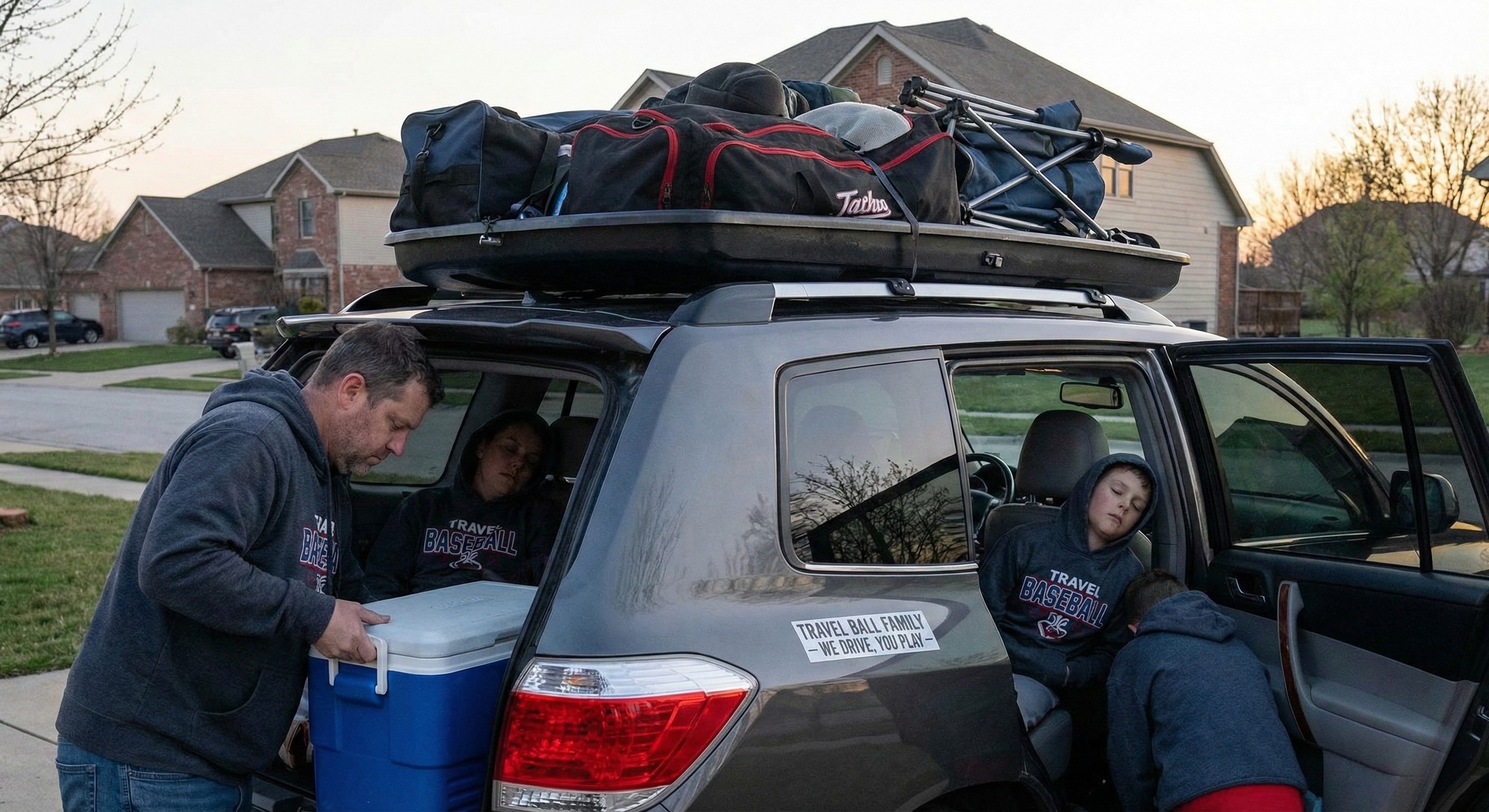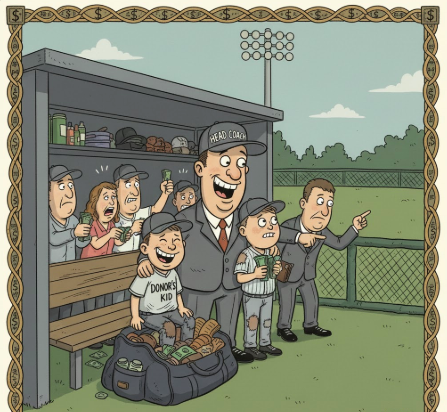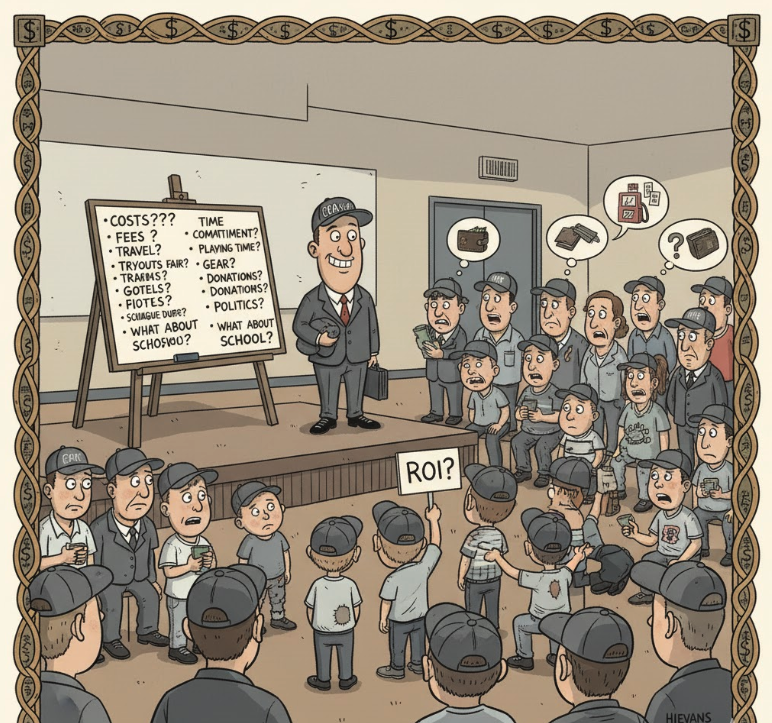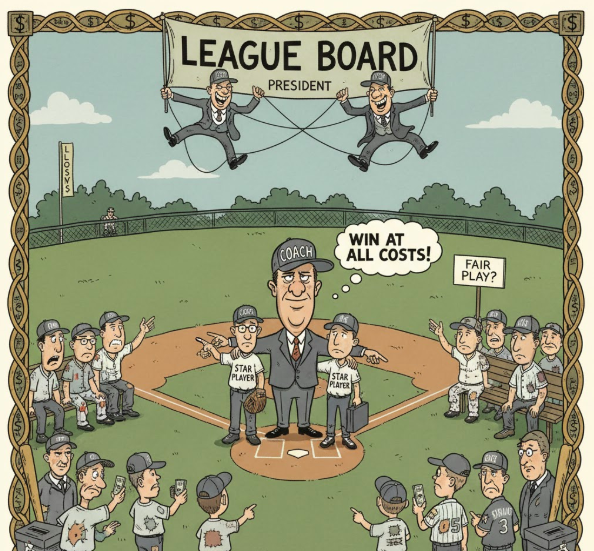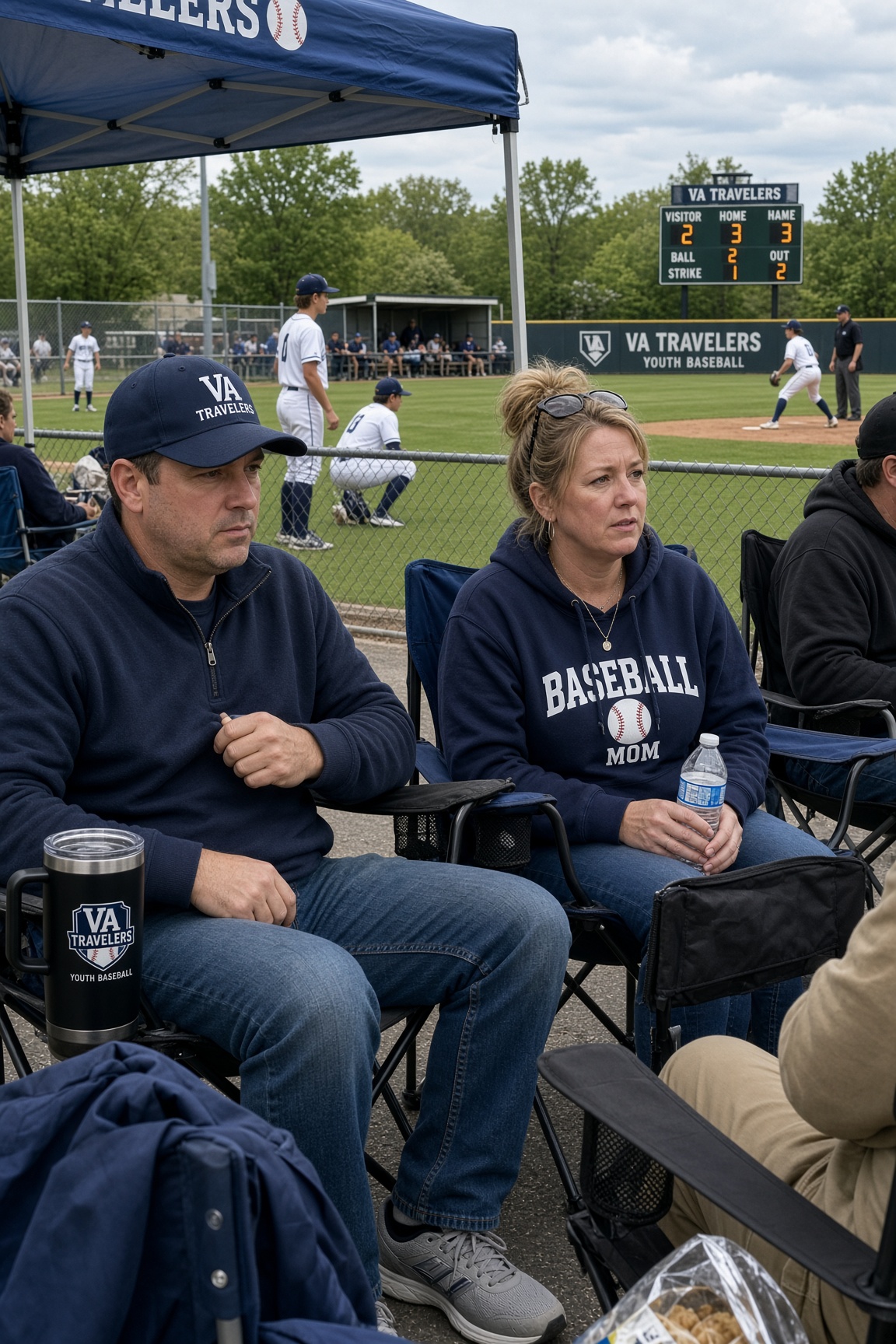
Most travel ball parents are not the problem. They drive the miles, pay the fees, and cheer. But almost every team has a moment when the sideline gets louder than the field: a missed call, a benching, a teammate's error in a one-run game. What the adults do in those few seconds shapes how every kid on the roster experiences the weekend.
This is not another lecture about toxic sports parents. It is a practical guide to sideline etiquette for travel baseball and softball families: what helps, what hurts, what to say when emotions run hot, and how to advocate without undermining the coach. For how stands behavior affects a whole program, see When Parents Cross the Line. This one is about what to do on Saturday.
Why the Sideline Matters More Than It Looks
Officials notice it first. In the National Association of Sports Officials' 2023 National Officiating Survey, which drew 35,813 responses from officials across sports and levels, 68.81 percent said sportsmanship is getting worse, up from 57.02 percent in NASO's 2017 survey. Asked who causes the most sportsmanship problems, about 40 percent of officials pointed to parents, more than coaches, fans, or players, according to the NFHS summary of the results.
Kids feel it too. In a 2016 study in the journal Family Relations, Utah State University researchers surveyed 163 parent and child pairs. Higher family spending on youth sports was linked to children perceiving more parent pressure, and that perceived pressure was linked to lower enjoyment and a weaker commitment to keep playing. As lead researcher Travis Dorsch put it, "What the child may call pressure, the parent may call support."
Enjoyment is what keeps kids in the game. A 2019 national parent survey by the Aspen Institute's Project Play and Utah State's Families in Sport Lab found that, according to parents, kids stayed in a sport for less than three years on average, and the most common reason they stopped (36 percent of the time) was that they no longer enjoyed it or lost interest.
What Kids Say They Want From the Stands
Ask the players. Researchers Jens Omli and Diane Wiese-Bjornstal interviewed 57 children ages 7 to 14 about how they wanted parents to act at games, and published the results in Research Quarterly for Exercise and Sport in 2011. Three parent roles emerged:
The supportive parent: attentive silence, cheering, encouragement, praise, empathy, and stepping in only to protect a child from real harm. Kids consistently preferred this.
The demanding coach: instruction, advice, and critical encouragement. Kids tolerated it only in limited situations.
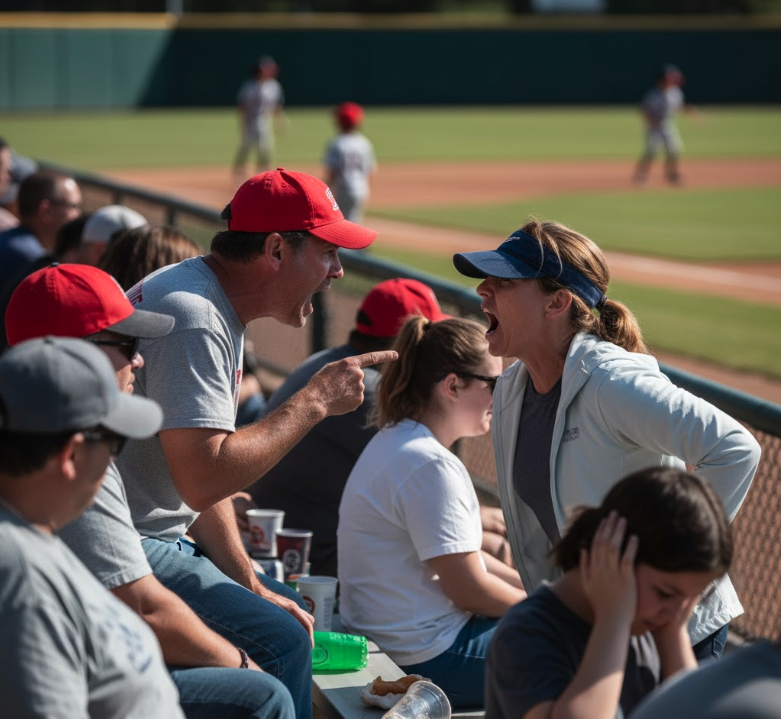
The crazed fan: arguing, blaming, put-downs, disruption, yelling, and over-the-top cheering. Kids consistently disliked it.
Several children wanted parents to cheer for the whole team, because being singled out added pressure. And the kids still wanted their parents to show up.
Sideline Do's and Don'ts
Do:
Sit, watch, and clap for effort, good at-bats, and teammates by name.
Applaud a great play by the other team once in a while. Kids notice.
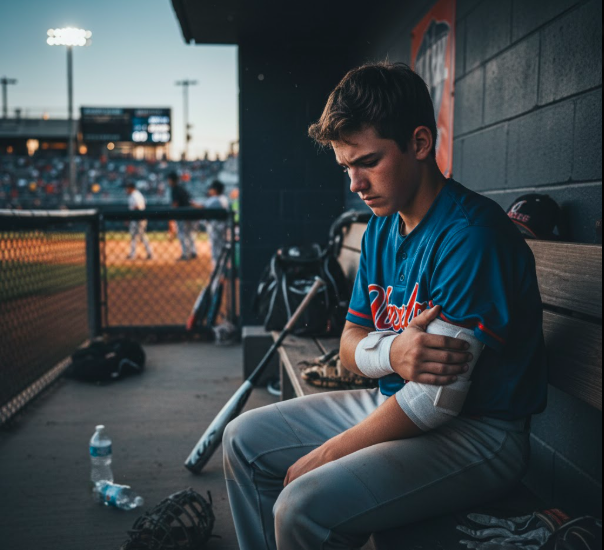
Keep your face neutral after an error. Your child will look toward the bleachers.
Bring the same energy to a lopsided loss as you bring to a walk-off win.
Don't:
Coach from behind the backstop. Mechanical cues shouted mid-pitch compete with the coach and pull your child's attention off the ball.
Comment on other people's kids, especially their errors or playing time.
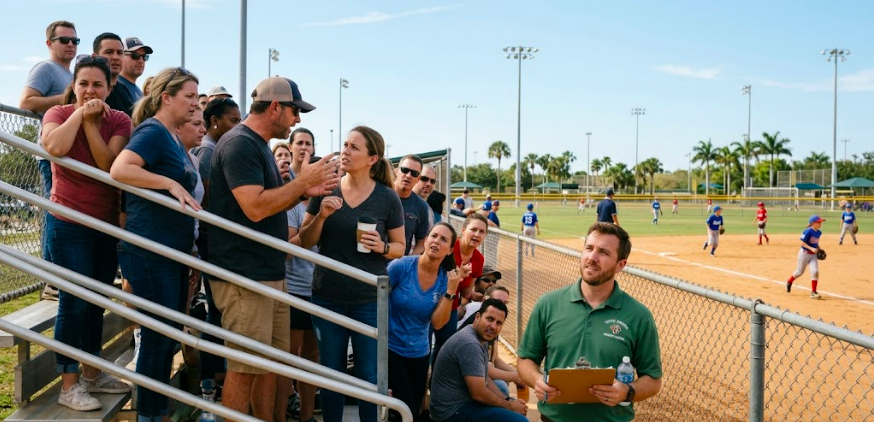
Argue balls and strikes. If a call needs to be challenged, that is the coach's job.
Forget who is listening. Between phones and livestream cameras, assume anything said at the fence can end up recorded and replayed.
Scripts for Tough Moments
When another parent is screaming at the umpire: Move next to them and say quietly, "I get it, that one hurt. Let's let Coach handle it. The kids can hear us."
When your child strikes out to end the game: On the walk to the car, try "I love watching you play." Then stop talking and let them decide whether to bring it up.
When your child gets benched or moved down the lineup: "That's frustrating. What did Coach say you can work on?" Avoid anything that sounds like "Coach doesn't know what he's doing."
When a teammate makes the error that costs the game: To your child: "Everybody makes that play wrong at some point. How do you think he's feeling?" To the teammate, if anything: "Get the next one."
When opposing parents are heckling your players: Do not answer. Tell your team manager, and let the coach or tournament staff deal with it.
How to Advocate Without Undermining the Coach
Sometimes you need to talk to the coach about playing time, position, workload, or how your child is treated. How you raise it matters as much as what you raise.
Set your own 24-hour rule. Even if your team does not have one, waiting a day after a game makes for a calmer, more useful conversation.
Let your player go first when they are old enough. A 13U player asking, "What can I work on to earn more innings at short?" is learning a life skill. Good coaches teach players to have those conversations, as we covered in How Good Travel Ball Coaches Actually Develop Players.
Ask, don't accuse. "Can you help me understand the plan for her at catcher?" opens a conversation. "Why is she sitting behind a kid who can't hit?" ends one.
Never compare your child to a teammate. Talk about your player's goals, not someone else's at-bats.
Know what can't wait. Safety, respectful treatment, and arm health are always fair to raise right away. MLB and USA Baseball's Pitch Smart guidelines publish age-based pitch count and rest limits, and they state that it is ultimately the responsibility of the parent and the athlete to make sure those guidelines are followed over the course of a year. Our guide to protecting a young player's arm covers the basics.
If the same concerns keep coming up, the problem may be the program. Our list of coach red flags to watch at tryouts and in the first three weeks can help you decide.
Be the Adult the Whole Dugout Can Count On
Your child is not the only one watching you. Teammates notice which parents clap for everyone and which ones go quiet when their own kid is on the bench. A simple "Nice at-bat, Marcus" to a kid whose parents could not make the trip costs nothing and can mean a lot. Our guide to managing parent relationships in travel ball goes deeper on keeping the bleachers a positive place.
Why Your Emotional Control Is the Real Lesson
Baseball and softball are built on failure. Even very good hitters make outs most of the time. Kids learn how to handle that by watching how adults handle a blown call or a lost championship game. A parent who stays steady after a tough inning is modeling the same skill a player needs after a strikeout. For the player's side of that pressure, read Pressure to Perform, and for everyday habits, see 5 Habits of a Great Baseball Parent.
A 12U bracket result lasts one weekend. The example the adults set when things get tense shows up every weekend.
At CurveballCritiques.com we believe that the sideline is part of the team. The best travel ball experiences come from programs where parents cheer for every player, let coaches coach, and handle disagreements privately and respectful. Be the calm voice in the bleachers, and your child and their teammates will carry that example long after their playing days.