When you look at travel baseball teams around the country, you’ll notice something subtle but important: not all teams get the same chances. A club from Florida isn’t operating under the same conditions as one from northern New Jersey. Weather, climate, geography — all of these change how often kids can practice, how many tournaments they can play, and how many reps they get.
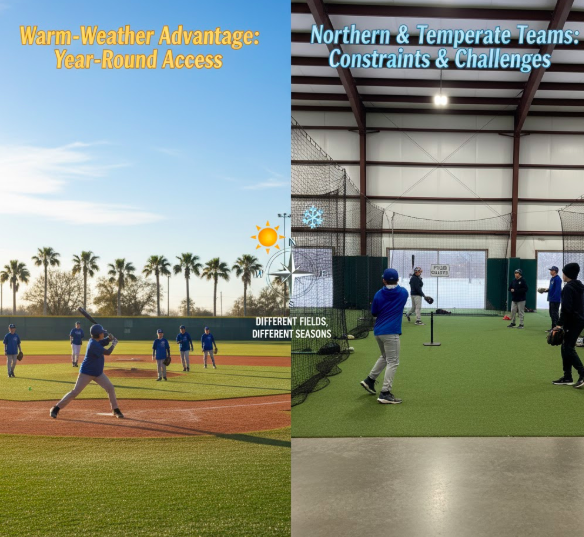
🌤️ Warm-Weather Advantage: Year-Round Access
Teams located in places like Arizona, Florida, Texas or Southern California have a built-in advantage. Because their winters are mild and fields stay usable, players can train, play games and attend tournaments almost year-round. One discussion noted: “In fact, the heat of summer and rainy afternoons are probably more prohibitive to baseball than the winter months” in places like Florida.
Another analysis found that states with warmer winters produce more Major League-level talent per birth than colder states — in part because kids grow up with more playing-time opportunity.
With more time on the field, year-round club schedules, and fewer weather cancellations, these teams can offer more practice hours, showcase opportunities, and competitive weekends.
❄️ Northern & Temperate Teams: Constraints & Challenges
Contrast that with travel teams in the Northeast, Upper Midwest, or other colder/climate-challenged regions. They face more field closures, shorter seasons, and fewer outdoor game days. A March snowstorm, frozen infields, or limited indoor facilities can all reduce quality reps.
These regional limitations mean kids have to be more strategic: rely on indoor training, offseason skill work, and travel further for tournaments. But the extra planning, cost, and time can make a real difference in development.
🧭 What These Variances Mean for Players & Parents
Reps and rhythm matter: More playing time isn’t just fun — it leads to more learning. If a team misses weeks of practice every winter, that’s lost growth.
Exposure differences: Teams in warm-weather states often travel less for tournaments (or have more home options) and may get the edge when college recruiters or scouts are watching.
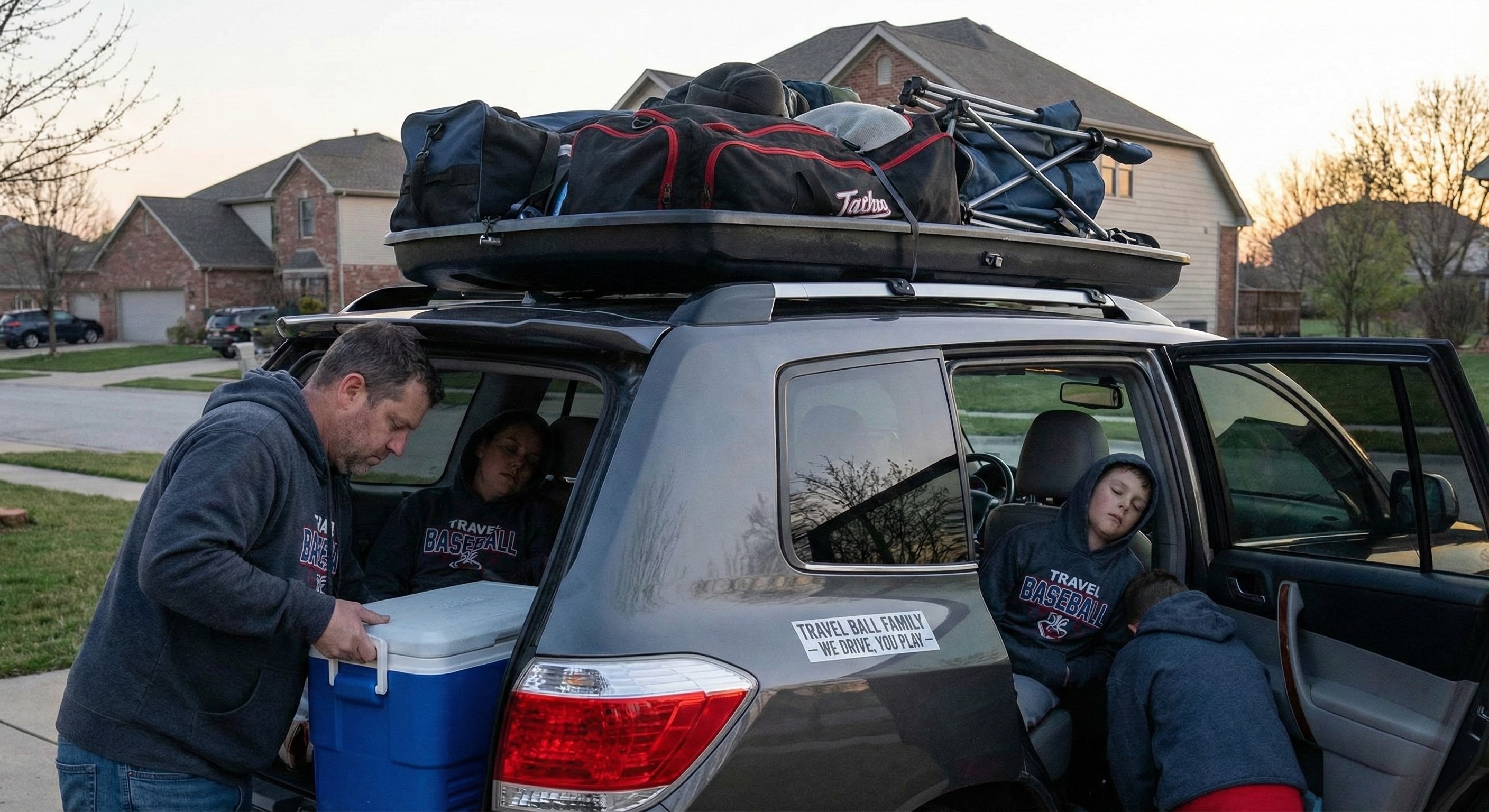
Cost and travel balance: Northern teams may end up traveling further (and spending more) just to get comparable competition or showcase exposure — raising the cost and burden on families.
Resilience and resourcefulness: Teams in colder climates often build smarter programs — more indoor training, more focused offseason skill work — which can create mental toughness and adaptability. That upside is less visible but real.
Equity and access concerns: Because warm-weather gives an inherent advantage, kids in colder regions need more resources (indoor space, travel funding, etc.) to stay competitive. That creates the kind of “unequal starting line” that affects youth sports broadly.
🔍 So What’s the Takeaway for Your Family?
Know your context: If you’re in a colder region, plan for seasonal limitations. Choose programs that understand that and make downtime count (indoor work, skill development, strength training).
Plan travel wisely: Don’t assume you’ll replicate warm-climate reps. Budget for travel, schedule indoor/off-season development, and set realistic expectations.
Focus on what you can control: It’s not just about more games: quality practice, good coaching, meaningful off-season work matter too. If you can’t get year-round outdoor hours, use the winter to build strength and skill smartly.
Ask the right questions of a program: “How do you handle winter training?” “What’s our indoor practice plan when weather closes fields?” “How do you ensure competitive exposure despite our region?”
Don’t buy the myth that warm-weather means easy path: While advantageous in some ways, the grind is still real — injuries, travel costs, and families who must commit time and money still exist everywhere.
✅ Final Thought
Travel baseball isn’t “the same everywhere.” Geography, climate and resources make a real difference in how teams operate, how many reps kids get, and how families manage the cost or travel requirements. But advantage doesn’t guarantee success — what matters most is how a program and a family respond to their conditions.
At CurveballCritiques.com, we believe smart preparation beats sheer volume. Whether you’re in a year-round warm state or navigating seasonal constraints up north, the key is building a program and mindset that works for you. Because ultimately, travel ball isn’t just about where you play — it’s how you develop.