Because the best way to deal with travel baseball politics is to never step into them in the first place.
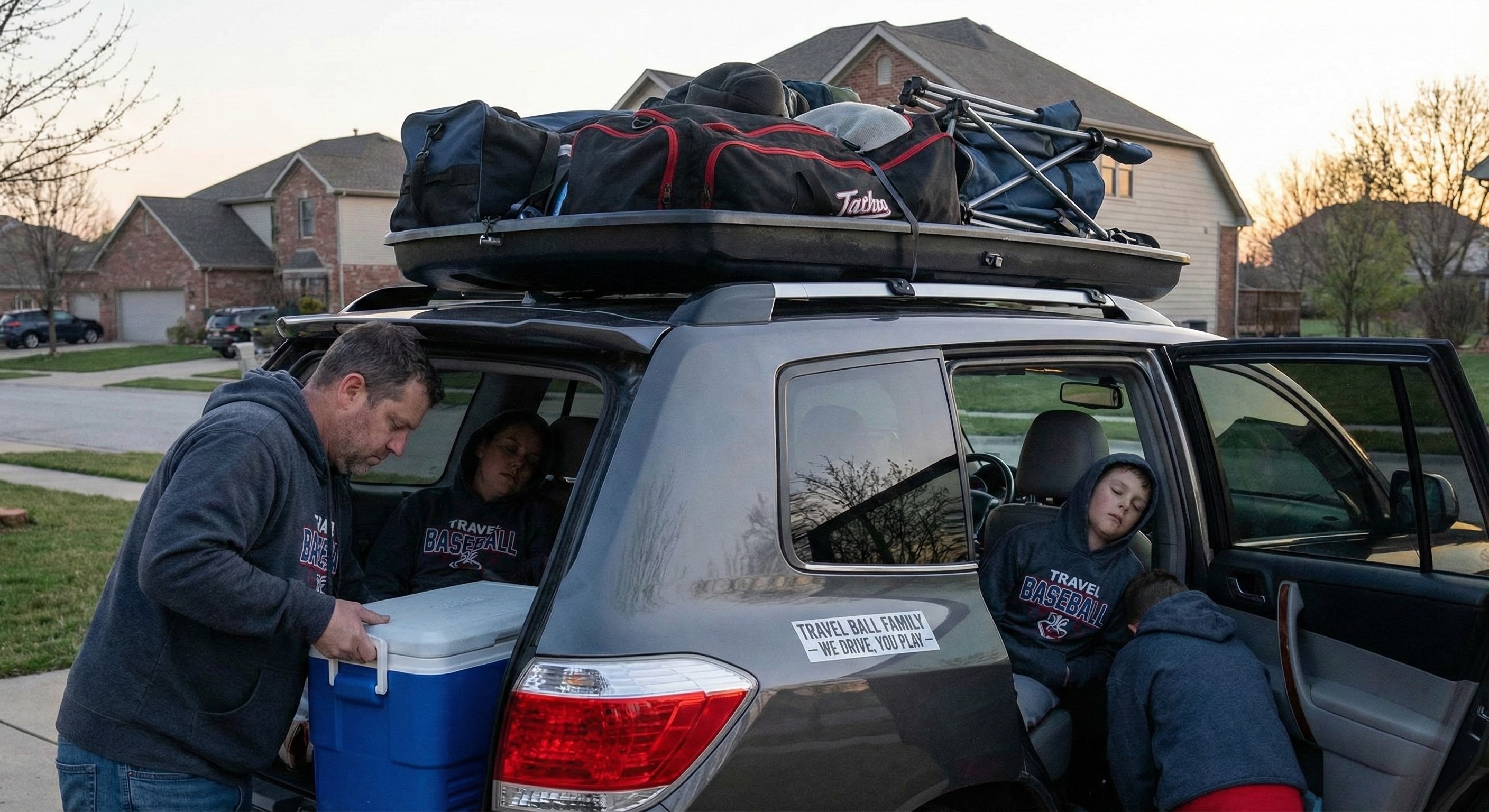
If you’ve been around travel baseball long enough, you know the pattern. Every season starts with excitement — new team, new gear, fresh start — and ends with frustration when the same handful of players get all the reps while everyone else wonders what they’re paying for.
Politics in travel ball isn’t new, but it is predictable. And if you know what to look for, you can spot a political program before it drains your wallet, your weekends, and your kid’s confidence.
Here are the red flags every parent should look for before joining a team.
🏫 1. The “Feeder Team” Vibe
Ask a simple question: Where do most of the players go to school?
If the majority come from one high school or middle school — and especially if the head coach works there — consider it a warning sign. You’re not just joining a travel team; you’re walking into a year-round high school prep program.
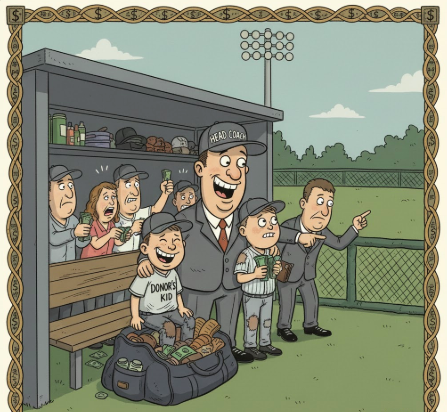
That means those players are going to get the innings, the showcase reps, and the coach’s trust. Everyone else? You’re likely there to fill out the roster and help cover costs.
✅ Pro tip: Look for teams with a mix of players from different schools. That usually means a more balanced approach and less built-in bias.
💰 2. “Everyone Makes the Team” Tryouts
If you show up to tryouts and notice that everyone seems to make it — congratulations, you’ve probably just found a revenue-based roster.
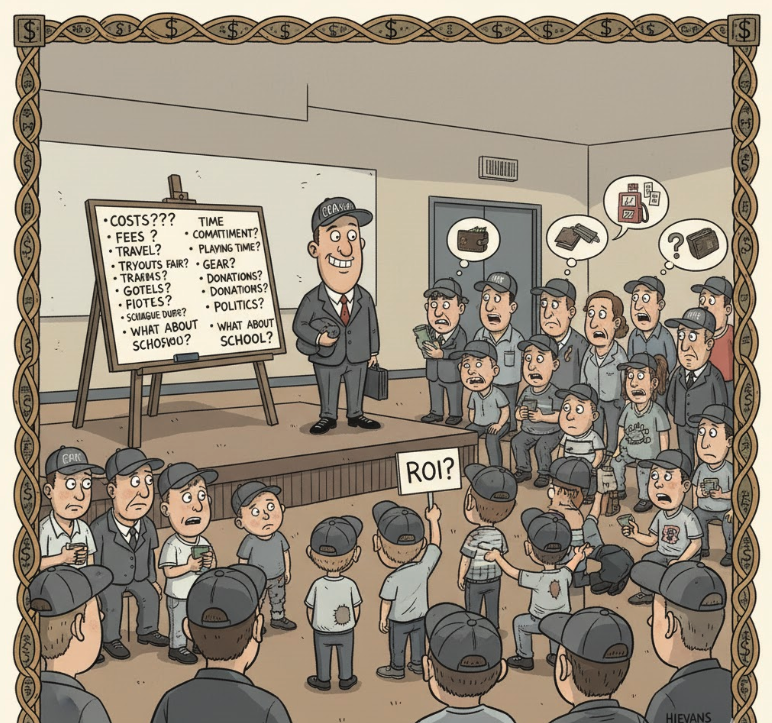
Some programs run massive tryouts not to evaluate talent, but to fill uniforms and fund tournaments. The problem is, once you’ve paid your fees, you might discover that your kid isn’t in the coach’s real plans. Playing time will go to the coach’s “core” group while everyone else gets token innings.
✅ Pro tip: Ask how many players they plan to carry and what the rotation looks like. If they dodge the question or say, “We’ll see how the season goes,” that’s your answer.
⚾ 3. Vague Promises About Playing Time
Watch out for buzzwords like “earned opportunities,” “development first,” or “we play to win.” They sound great, but without transparency, they’re meaningless.
Ask directly:
How do you determine lineups?
Do all players get reps in pool play?
How do you handle positional depth?
If you get generic answers or attitude for asking, it’s probably a political setup. Good coaches don’t get defensive about fairness — they explain their system.
✅ Pro tip: Look for programs that post or discuss clear player development plans. That’s a sign they’re focused on growth, not favoritism.
🧢 4. Familiar Faces in Every Key Spot
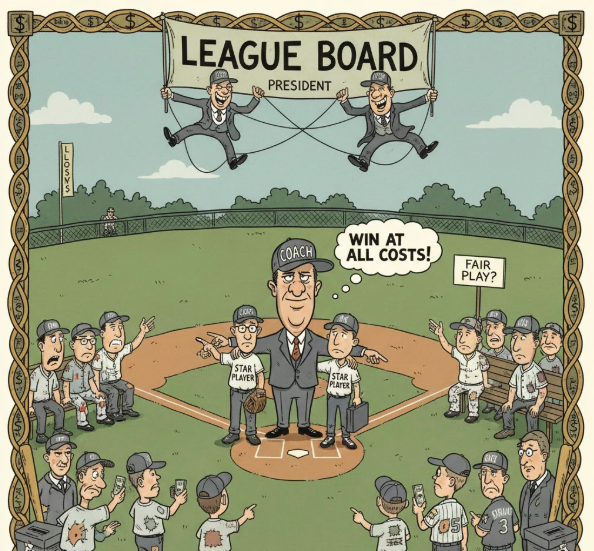
If you notice that the same handful of players are pitching, catching, and hitting in the heart of the lineup every weekend — and they just happen to be from the coach’s school, town, or social circle — it’s not coincidence. It’s politics.
That kind of favoritism breeds resentment fast. The best travel programs rotate opportunities, teach versatility, and evaluate players based on results, not relationships.
✅ Pro tip: Before joining, ask other parents how the team handled adversity last season — when someone struggled, who got the next opportunity? The answer will tell you everything.
📣 5. Coaches Who Name-Drop More Than They Teach
If the coach spends more time talking about “his guys” at certain high schools, college connections, or “who he knows,” that’s a red flag. Coaches who lead with name-dropping often use the program to build their own brand — not the players’.
You want a coach who talks about development, accountability, and growth. Not one who uses buzzwords and brags about which showcase they got invited to last summer.
✅ Pro tip: Ask what the team’s goals are for the season. If the coach’s answer is full of I’s and my’s, instead of we’s and our kids, move on.
🚨 Bonus Red Flag: The Parent Silence Test
At tryouts or team meetings, take a look around. Do the veteran parents seem friendly and open, or quiet and tight-lipped? Experienced travel ball parents can smell politics from a mile away — and if they’re not talking much, there’s probably a reason.
⚾ Final Thought: Trust What You See, Not What You’re Sold
Every travel team looks great on paper — professional photos, sharp uniforms, catchy mission statements. But the real story plays out on the field and in the dugout.
The best programs build around fairness, transparency, and development. The political ones build around connections, favoritism, and keeping a select few happy.
At CurveballCritiques.com, we always say: you can’t buy chemistry, and you can’t fake integrity.
Before you commit your time, money, and trust, make sure you’re joining a program that values your player — not just their payment.
Because in travel baseball, the only politics that should matter are between the lines.