Spoiler: it’s way more than just uniforms and tournament dues.
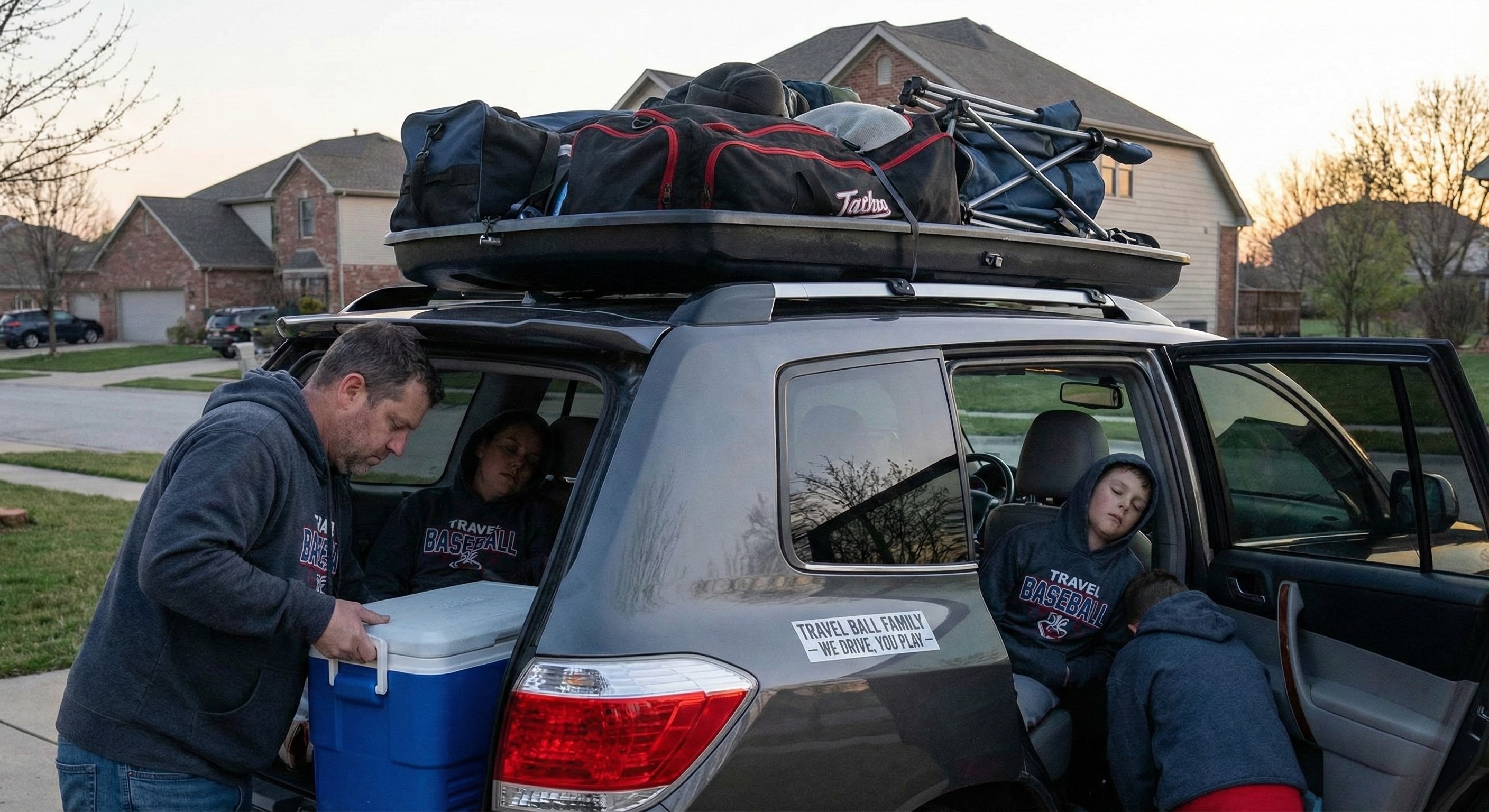
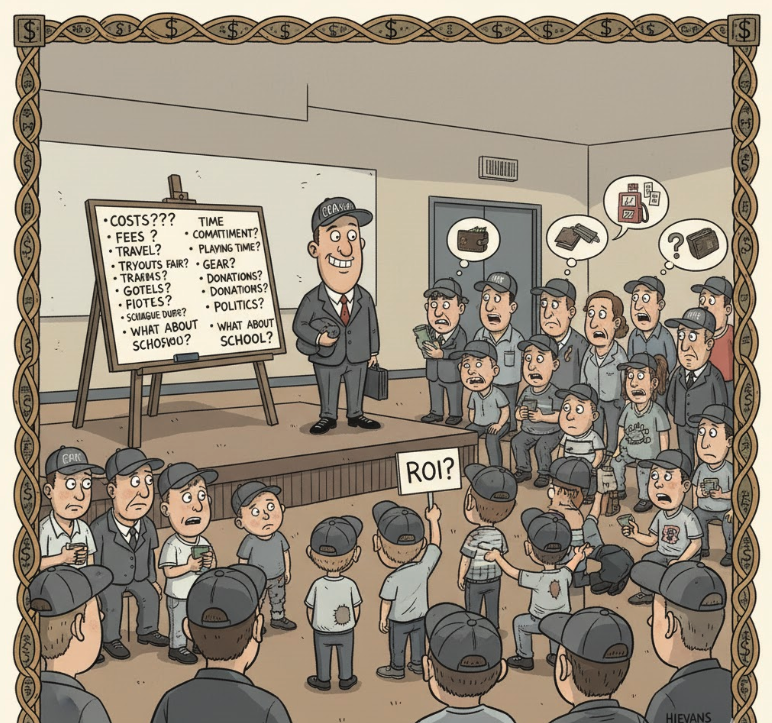
Every parent who’s been through a travel baseball season knows the truth: the “team fee” is just the cover charge. Once the schedule drops, the real costs start to pile up — the ones that sneak in between weekends and road trips, slowly turning your family’s love of the game into a part-time financial commitment.
Let’s break down what you’re really paying for when your kid joins that travel team — because the price of chasing the dream doesn’t stop at registration.
⛽ 1. Gas, Tolls, and Miles on the Car
That first drive to a tournament feels exciting — new field, new season, big energy. But after a few months? It’s hundreds of miles, multiple tanks of gas, and toll receipts stuffed into the glovebox.
Depending on your region, you might be logging 3,000 to 6,000 miles a season, which easily adds up to hundreds in gas and tolls — not to mention wear and tear on your car. Tires, oil changes, and brake pads don’t replace themselves, and let’s be honest, most of us are running on fumes by July.
🏨 2. Hotels and “Mandatory Stay” Weekends
Few things drain the wallet faster than the phrase “stay-to-play.”
Many tournaments require teams to book through partner hotels, often at inflated prices. Add parking fees, late checkouts, and the occasional “resort fee,” and your one-night stay for two games just turned into a mini vacation — without the fun.
Then there’s eating out every meal, team dinners, and the obligatory late-night ice cream runs. It’s not hard for a single weekend tournament to cross the $500–$800 mark once lodging and meals are factored in.
✈️ 3. Air Travel (for Those Big Showcases)
If your team travels out of state — or to those big tournaments in Florida, Georgia, or Arizona — buckle up. Flights for parents, checked bags full of gear, and rental cars add up fast. Even a modest trip for one parent and player can cost $1,200–$1,800 when all is said and done.
Multiply that by a couple of showcase events, and you’re suddenly questioning whether your kid’s curveball has frequent flyer miles.
⚾ 4. Equipment and Upgrades (Because “Last Year’s Glove” Isn’t Cool)
Between bats, gloves, cleats, bags, batting gloves, helmets, and training gear, equipment costs easily hit $1,000–$1,500 a year — sometimes more for elite players.
And it’s not just the big purchases. Lost batting gloves, broken sunglasses, and “team color” accessories seem to disappear every other weekend.
Travel baseball isn’t just a sport — it’s a lifestyle brand.
🥤 5. Food, Snacks, and “Ballpark Life” Expenses
Tournament weekends mean concession stands, energy drinks, and gas station snacks. Multiply that by every game, every road trip, and every sibling who tags along, and you’re spending more on food than you realize.
Add in coolers, cases of water, and the occasional team BBQ, and you’re staring at a grocery bill that rivals a family reunion.
🎥 6. The Hidden Costs No One Mentions
Lost workdays: taking Fridays or Mondays off for travel and tournaments.
Sibling care: babysitters or extra costs for bringing other kids along.
Training and lessons: pitching, hitting, speed, or strength sessions between seasons — often $50–$100 per hour.
Recovery gear: ice wraps, massage guns, arm sleeves, physical therapy visits… because the grind is real.
These aren’t “optional” once your kid plays at a serious level — they’re part of keeping them healthy and competitive.
💸 The Reality Check
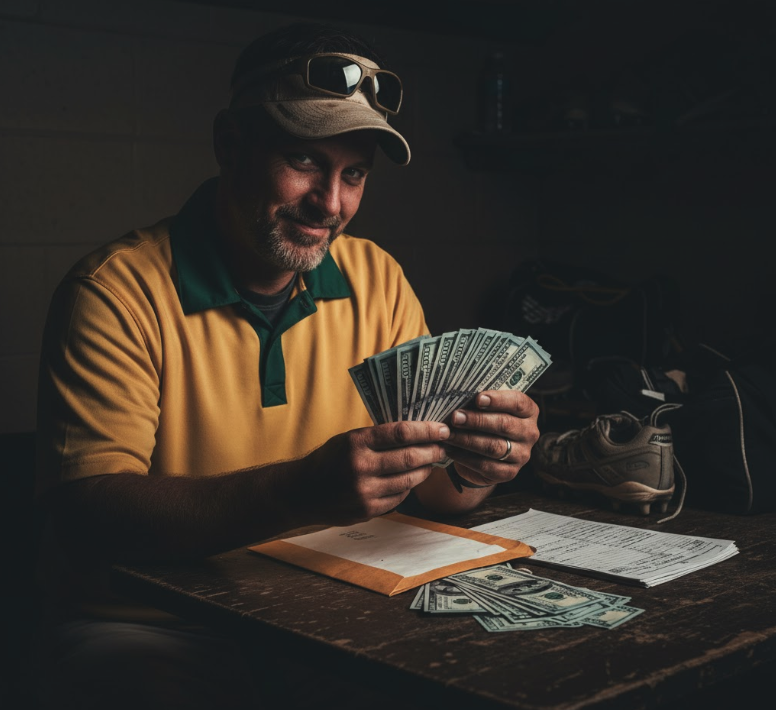
When you add it all up — travel, hotels, food, training, and gear — many families easily spend $8,000 to $12,000 per year on travel baseball, before a single scholarship conversation even starts. And that’s for one player.
It’s not to say it isn’t worth it — the experiences, friendships, and lessons are priceless. But let’s stop pretending that the only cost is the team fee. The real cost is everything that comes after.
⚾ Final Thought: The Game Is Worth It — If You Go In With Eyes Open
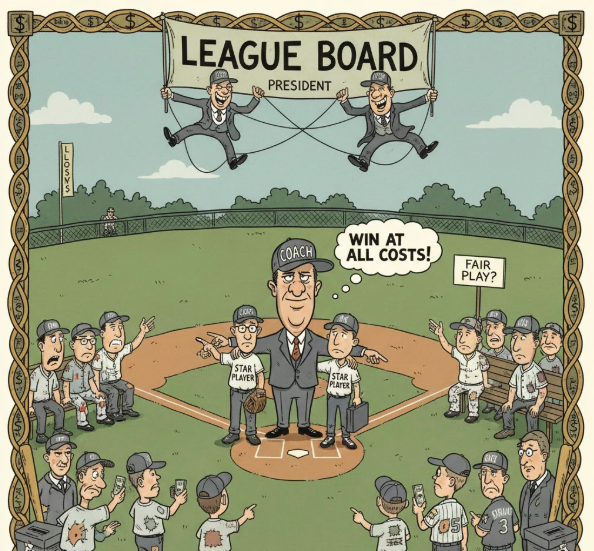
Travel baseball can be an incredible investment in your child’s growth and passion. But it’s also a serious financial commitment — one that demands transparency from programs and realistic expectations from families.
At CurveballCritiques.com, we’re not here to scare parents — we’re here to keep it real. Because when you understand what you’re really signing up for, you can budget smarter, plan ahead, and still enjoy the game you love without resenting the price tag.
After all, baseball should cost you time and effort — not your peace of mind.