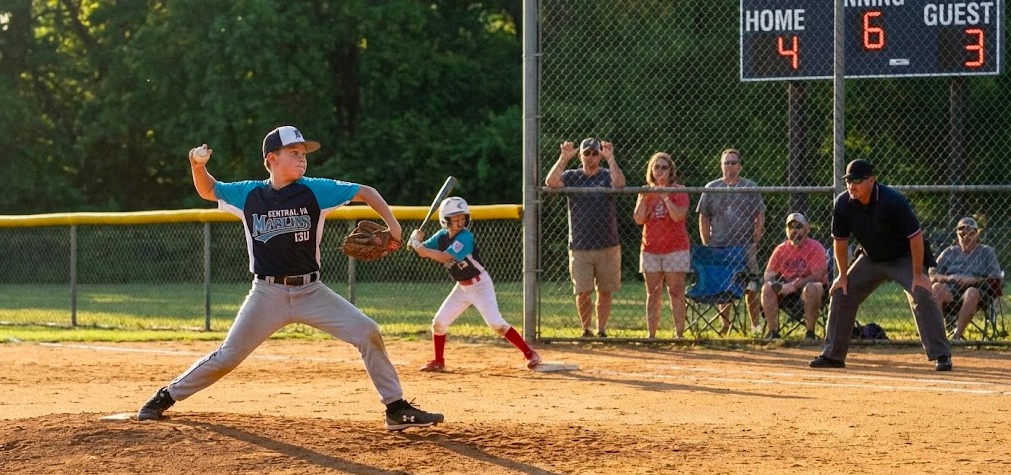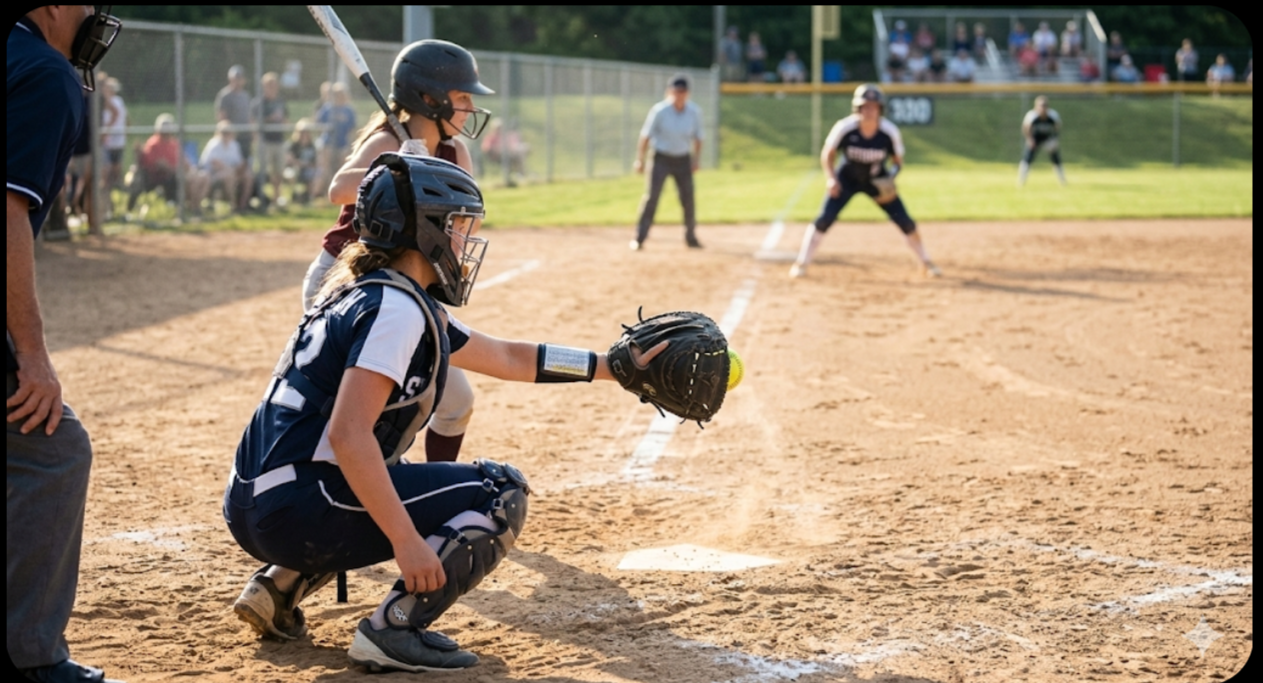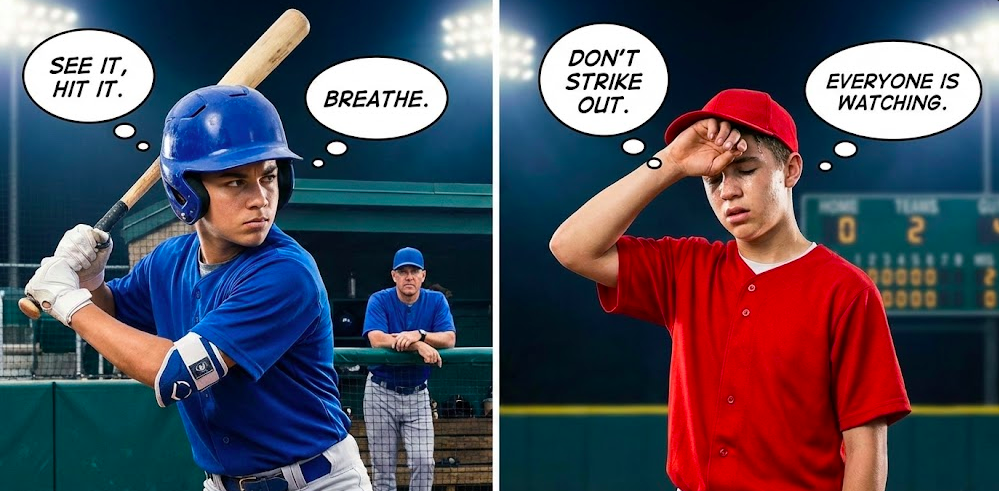
Some players crumble when the game is on the line. Others rise.
Two kids with the same talent level… one thrives in chaos, the other folds under it.
That difference isn’t luck.
It’s not magic.
It’s not “he just has it.”
Clutch is a skill. And like any skill, it can be trained.
At higher levels of baseball, talent becomes the baseline—everyone can hit, throw, and field. What separates players isn’t mechanics or size. It’s who performs when the pressure spikes.
So how do you actually train clutch?
Here’s how the best do it.
🧠 1. Simulate Pressure in Practice
Most practices are too comfortable.
Front toss. Soft hands drills. Controlled bullpens. Predictable reps.
Game pressure isn’t predictable.
So if players only practice in calm, controlled environments, guess what?
They only perform well in calm, controlled environments.
To build clutch:
Put players in count pressure situations (2 strikes, runner on 3rd, one out).
Give pitchers must-throw strikes scenarios.
Create competitions during practice where reps matter.
Add noise, distractions, or time pressure.
Players learn to perform under pressure by… being under pressure.
🗣️ 2. Teach Players to Control Their Self-Talk
When a player tightens up, it’s rarely physical.
It’s the internal monologue:
“Don’t strike out.”
“Don’t miss this.”
“Coach is watching.”
“If I mess up, the game’s over.”
Clutch players flip that script.
Their internal voice is calm, clear, and simple:
“See it, hit it.”
“One pitch at a time.”
“Breathe.”
“I’ve done this before.”
Self-talk is the fastest way to shift a mindset from panic to confidence.
And confidence is the foundation of clutch.
🧘 3. Use Breathing to Reset the Moment
This one sounds soft — until you watch a college or pro game and notice how every top player uses breathing rituals.
Controlled breathing does three things:
Lowers heart rate
Clears the mind
Resets the body after tension
One deep breath before every pitch can be the difference between rushed, anxious swings and locked-in execution.
Players who breathe with intention stop the moment from becoming “too big.”
👀 4. Focus on the Process, Not the Outcome
Pressure comes from thinking about what’s at stake:
the win, the loss, the embarrassment, the glory.
Clutch players focus only on the next action.
Pitchers: your job is one pitch.
Hitters: your job is one swing.
Fielders: your job is one ball.
When players zoom in on the moment instead of the meaning, performance relaxes—and improves.
Coaches should reinforce process goals:
quality pitch
good swing decision
clean footwork
Not the outcome.
The scoreboard will take care of itself.
🔥 5. Build Emotional Neutrality
The clutch gene isn’t hype. It’s composure.
Clutch players aren’t ice-cold robots — they just don’t let emotions take the wheel.
They don’t ride highs too high or lows too low.
This looks like:
a hitter who shrugs off a bad call
a pitcher who ignores crowd noise
a fielder who refocuses after an error
When players regulate emotion, they regulate performance.
🧩 6. Repetition + Pressure = Confidence
Clutch is basically confidence under stress.
And confidence comes from reps — reps with consequences.
The more a player survives tough moments, the more they expect to succeed in them.
You build clutch the same way you build muscle:
stress + recovery + repetition.
🎯 Final Thought: Clutch Isn’t Luck. It’s Built.
At CurveballCritiques.com, we believe pressure moments reveal the truth about a player:
Not how talented they are, but how prepared.
Clutch performers aren’t born — they’re built through:
intentional training
mental discipline
competitive reps
emotional control
The players who embrace the chaos are the players who win games when it matters.
And the best part?
Every kid can learn it.