Catching is one of the few positions in softball where people often fall in love with the wrong thing first.
A catcher throws one runner out with a rocket to second, and suddenly everyone starts talking about arm strength and pop time. And yes, that stuff matters. It absolutely does. But if you ask coaches what they really trust behind the plate, the answer usually goes deeper than one flashy throw.
The best catchers are the ones who make the game easier for everyone else. They settle pitchers down, block the ball, receive cleanly, control tempo, and stay steady when the inning starts getting weird. That’s why catcher development has to be looked at as a full package — not just one metric.
Pop Time Gets Attention for a Reason
Let’s start with pop time, because it’s the easiest thing to notice. A catcher who gets rid of the ball quickly and puts it on the bag changes how aggressive the other team wants to be. That matters. Runners think twice. Coaches hesitate to send. Middle infielders trust what’s coming in.
But pop time is not just “how hard can you throw?” It’s footwork, transfer, timing, and staying under control. A catcher with a huge arm but sloppy mechanics often ends up slower than a catcher with cleaner movement and a quicker release.
A lot of young catchers make the mistake of rushing. They try to move too fast, their feet get messy, the exchange gets long, and the throw sails. Quick is good. Out of control is not. Good pop time comes from efficient movement, not panic.
Receiving Is More Important Than Most People Realize
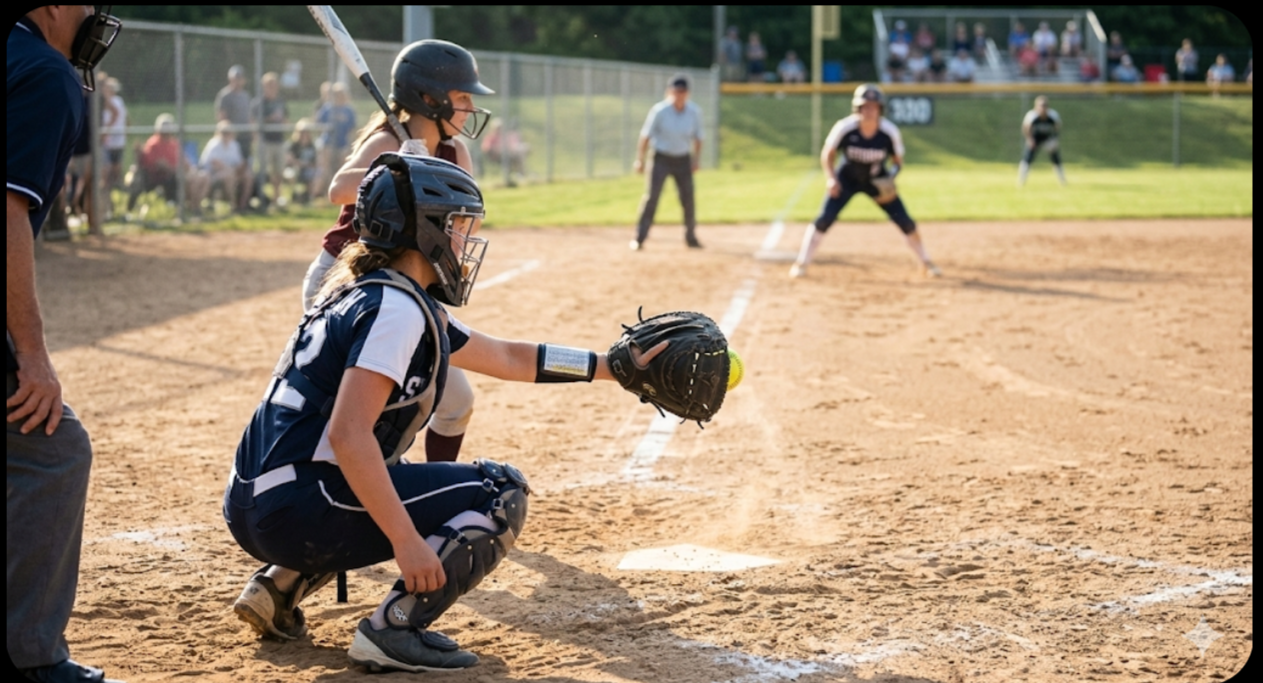
Receiving doesn’t always get the same hype, but coaches notice it immediately. A catcher who catches the ball cleanly, presents it well, and keeps everything calm behind the plate brings value on every single pitch.
Good receiving means:
quiet glove
strong target
soft hands
body control
staying centered instead of stabbing at pitches
Even in softball, where framing isn’t talked about quite the same way it is in baseball, receiving still matters because it affects rhythm. Pitchers throw better when they trust the target. Umpires respond better to catchers who look polished and under control. Infielders and coaches feel that steadiness too.
If a catcher is dropping pitches, drifting, or pulling the glove all over the place, it creates stress fast. The position starts to feel unstable. That’s why receiving is one of those “little things” that actually isn’t little at all.
Blocking and Toughness Still Matter
There’s also the gritty side of catching that never goes away: blocking, competing, and handling chaos.
A catcher has to want that job. It’s hot, it’s uncomfortable, and sometimes the game gets ugly. Balls bounce, innings get long, pitchers lose command, and runners start creating pressure. A strong catcher doesn’t disappear when that happens. She gets more locked in.
Blocking is huge because it turns potential damage into manageable moments. One blocked pitch with runners on can save an inning. And beyond technique, blocking sends a message to the pitcher: you can miss, and I’m still here.
That trust is everything.
Game-Calling and Feel for the Game
This is the part that separates catchers as they get older.
Game-calling is not just picking random signs or repeating the same sequence every hitter. It’s understanding the pitcher you have, the hitter in the box, the count, the situation, and the tone of the moment. It’s knowing when to settle things down and when to attack.
You can’t fake that part. It comes from experience, paying attention, and learning how the game actually unfolds. Some catchers have great physical tools but never really learn to think the game. Others may not have elite arm strength, but they know how to manage an inning and keep their pitcher in a good place mentally. Coaches love those catchers.
And honestly, pitchers do too.
So What Matters Most?
The real answer is that all three — pop time, receiving, and game-calling — matter. But if you’re asking what builds a catcher coaches truly trust, it usually starts with receiving and consistency, then expands into game management, and then gets amplified by pop time.
A great throw is valuable. But a catcher who can handle a whole game is even more valuable.
If you’re developing a catcher, don’t let all the attention go to stopwatch numbers. Build the footwork. Build the transfer. But also build the quiet glove, the blocking habits, the communication, the confidence, and the feel for the game. That’s what turns a kid who “can catch” into a catcher people actually want behind the plate.
At CurveballCritiques.com, we believe the best catchers aren’t just measured by how fast they throw to second — they’re measured by how much confidence, control, and stability they bring to the entire field.