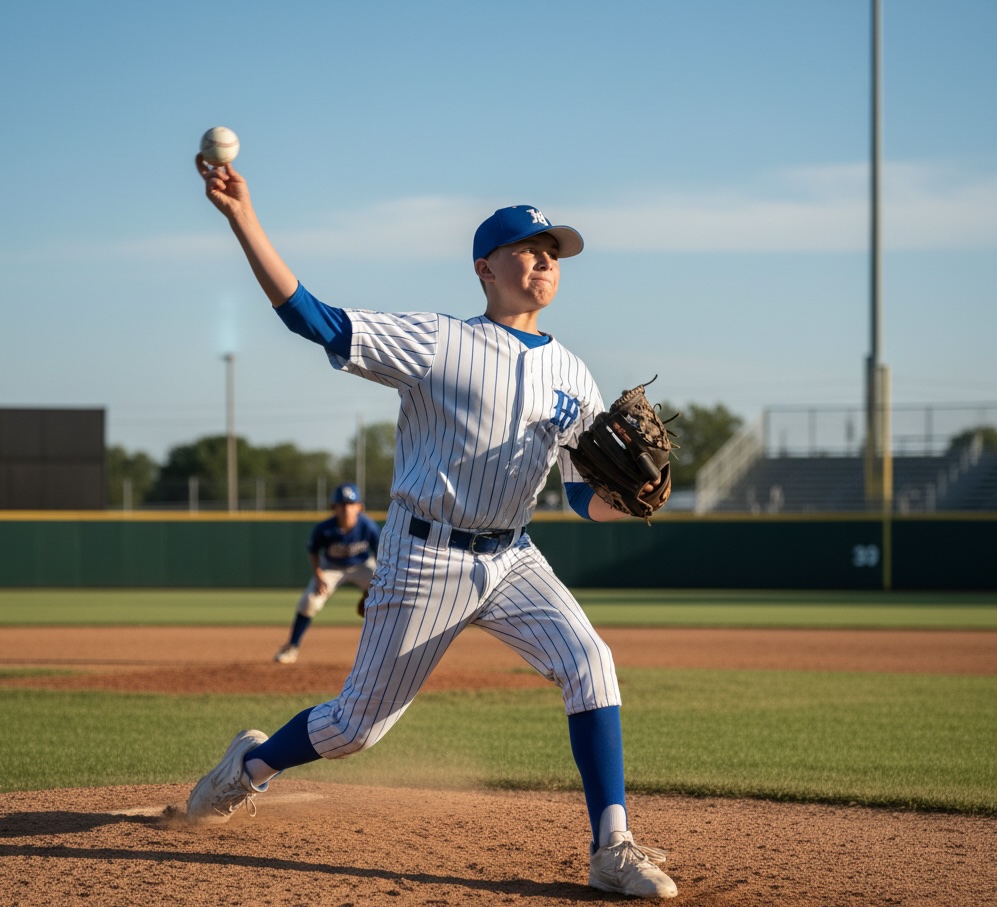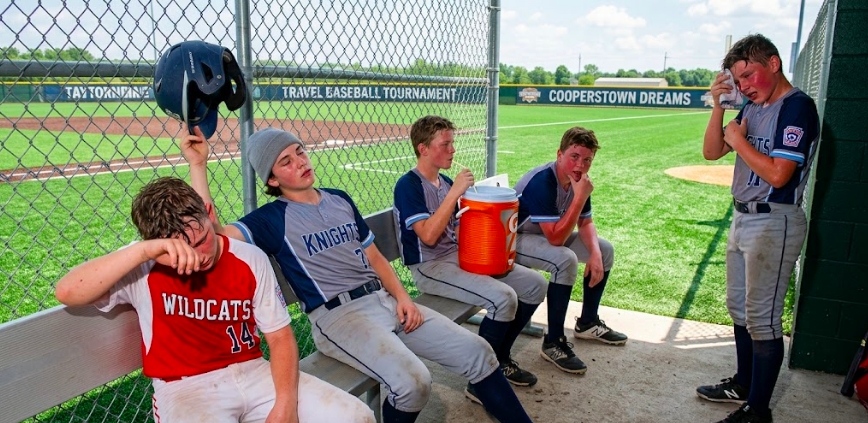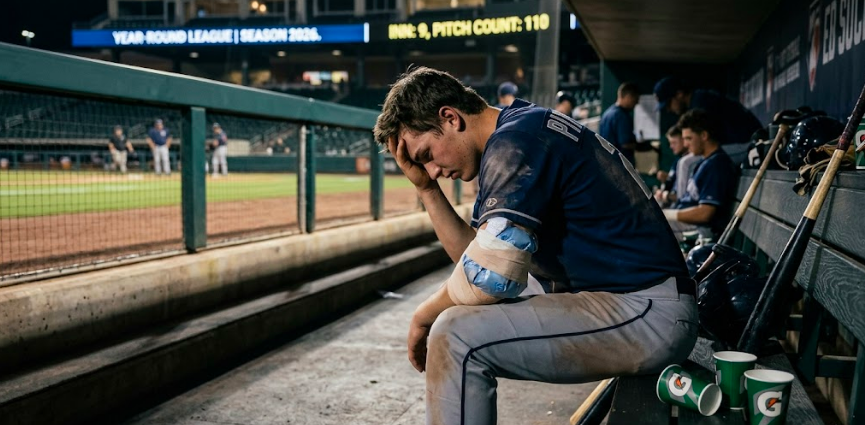
If you spend any time scrolling through sports training feeds, you have likely seen the videos. Physical therapists, orthopedic surgeons, and movement specialists are sounding the alarm louder than ever before. Yet, in dugouts, batting cages, and parking lots across the country, the same anxious conversations keep happening. Parents are wondering why their twelve-year-old’s elbow is constantly sore, and players are quietly dealing with shoulder tightness, hoping it will just go away before the next tournament.
The pressure to compete is higher than ever, but the math on arm health has not changed. The belief that throwing more innings is the only way to get noticed or get better is still the fastest path to the bench. For players navigating the crowded landscape of travel baseball, understanding the difference between productive training and destructive overuse is the most important skill you can develop.
The Disconnect Between Social Media Science and the Weekend Schedule
There is a massive gap between what we know about sports science and what actually happens on the tournament circuit. On social media, prominent physical therapists show detailed breakdowns of pitching mechanics, explaining how shoulder blades must move and why rest is non-negotiable. But on Friday nights, when the bracket is set, those lessons are often forgotten.
The push for year round pitching youth leagues encourage can feel impossible to escape. The winter offseason has slowly morphed into a season of indoor leagues, early-season showcases, and high-velocity throwing programs. Many players feel that if they put the ball down for two months, their teammates will pass them by.
However, the medical data points in the opposite direction. The human body, especially a growing one, requires periods of non-throwing to rebuild tissue and restore joint mobility. When you throw competitive pitches twelve months a year, your shoulder muscles never fully recover, which leads to subtle changes in how you throw. You might not feel sharp pain immediately, but your body will start compensating, putting extra stress on your elbow to make up for a tired shoulder.
The Myth of "More Innings Equals Better Development"
It is easy to fall into the trap of thinking that more game time always equals better development. In travel baseball, you might play five games in a single weekend. If your team is short on pitching, you might find yourself throwing a couple of innings on Friday and then coming back to close a game on Sunday.
This volume of throwing is where overuse injuries 12U 14U players experience start to take root. During these specific age windows, your bones are growing faster than your muscles and tendons. The growth plates in your shoulder and elbow are still open and highly vulnerable to repetitive stress.
When you throw while fatigued, your mechanics naturally break down. You stop using your legs and hips to generate power because they are tired, which forces your arm to do all the work. A tired arm cannot maintain a clean release point. You are not developing better habits during those extra innings, you are actually training your body to use bad mechanics, all while drastically increasing your risk of a growth plate fracture or a ligament tear.
The Reality of Tournament Math and Cumulative Load
To keep players safe, organizations point to pitch counts. While pitch count guidelines 2026 updates have tried to establish safer limits, the way travel baseball tournaments are structured can make these rules difficult to enforce.
A player might stay under the limit for a single game, but when you add up the warm-up pitches in the bullpen, the throws across the diamond between innings, and the games played for secondary teams, the true workload is often double what is written on the scorecard.
True recovery is not just about taking a day off after throwing fifty pitches. It is about the cumulative load over weeks and months. If you are pitching every weekend from March through October, and then transition immediately into a winter velocity program, your arm is under constant, uninterrupted stress. Your body needs at least two to three consecutive months of no competitive throwing every year to allow the shoulder socket and elbow joint to reset.
What Real Arm Care Looks Like
The term "arm care" is thrown around constantly, but it is often misunderstood. Real arm care travel baseball players need is not just a quick routine with resistance bands before you step on the mound. Warm-up bands are great for getting blood flow to the rotator cuff, but they cannot fix an arm that is chronically exhausted.
True arm care is about balance and lifestyle:
* Prioritizing Sleep and Nutrition: Your body repairs micro-tears in muscle tissue when you sleep. If you are sleeping six hours a night and eating fast food between doubleheaders, your recovery will lag behind.
* Building Total-Body Strength: Your arm is just the end of the whip. The power of a pitch comes from your legs, hips, and core. Spending time in the gym building overall strength will do more to protect your arm than any throwing drill.
* Advocating for Yourself: The most important skill a player can learn is how to tell a coach or parent, "My arm feels heavy today." There is a major difference between normal muscle soreness and joint fatigue. Learning to recognize that difference can save you from a season-ending injury.
Development does not stop when you put the baseball down. In fact, taking a designated break from throwing allows you to focus on becoming a better athlete. You can run, lift, work on your agility, and give your joints the rest they need to grow.
Taking Control of Your Journey
It is easy to feel like you do not have a choice when a tournament championship is on the line and your coach asks if you can throw one more inning. But your long-term future in this game is worth more than a trophy in a weekend tournament. The players who throw hard in high school and college are not the ones who threw the most innings at age twelve, they are the ones who survived those years with their joints intact.
Pay attention to how your body feels, track your own weekly throwing volume, and do not be afraid to set boundaries. The best pitchers are not just the ones with the best movement or the highest velocity, they are the ones who are healthy enough to stay on the field.
At CurveballCritiques.com we believe that youth sports should build players up rather than wear them down, and protecting the physical health of young athletes must always come before tournament standings.