In travel baseball, few words carry more weight than “national.”
National team. National schedule. National exposure.
It sounds elite. It sounds exclusive. And for many families, it sounds like the next step toward college or beyond.
But the real question is one that rarely gets asked honestly:
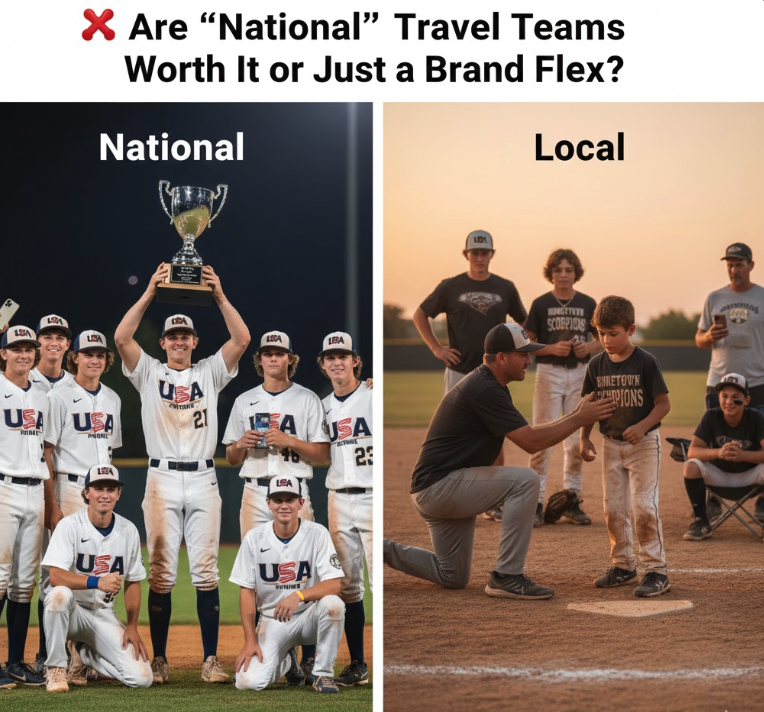
Are national travel teams actually worth it — or are they just an expensive brand flex?
🧢 What “National” Usually Means (and What It Doesn’t)
A true national team should imply:
top-tier talent from multiple regions
a consistent, competitive schedule
meaningful exposure opportunities
experienced coaching and development
In reality, “national” often means:
a recognizable logo
a heavy travel schedule
higher fees
a rotating roster of guest players
and a marketing-driven pitch
Many national programs operate less like teams and more like touring brands — focused on visibility rather than cohesion or development.
✈️ The Travel Burden: Exposure at a Cost
National teams travel a lot.
Flights, hotels, rental cars, meals, missed school, missed family time — it adds up quickly.
Families often spend $12,000–$20,000 per year once everything is factored in.
The promise?
More exposure.
The reality?
Exposure doesn’t equal opportunity unless:
your player is truly ready
the reps are meaningful
the role is consistent
Sitting on the bench at a national event doesn’t help anyone.
⚾ Development vs. Visibility
One of the biggest risks of national teams is sacrificing development for branding.
Players may:
get fewer at-bats
lose defensive reps
pitch less consistently
be locked into narrow roles
Coaches often prioritize winning big events over rotating players or teaching. That might boost the brand — but it can stall individual growth.
For many players, a strong regional team with real reps beats a national jersey with limited opportunity.
🎭 The Guest Player Problem
National teams frequently rely on guest players to fill rosters for major events. This creates:
instability
unclear roles
resentment among rostered players
chemistry issues
When families are paying full “national” fees, watching a guest player step into a prime role can feel like betrayal — not opportunity.
🧠 Who National Teams Do Make Sense For
National teams can be a good fit if:
the player is physically and mentally ready
they consistently compete at the highest level
the role is clearly defined
exposure aligns with realistic goals
development doesn’t stop
For the right player at the right time, a national schedule can accelerate visibility.
But timing matters.
🚩 Red Flags to Watch For
vague explanations of playing time
inflated “college exposure” claims
heavy reliance on guest players
constant roster turnover
emphasis on branding over instruction
If the pitch feels more like marketing than development, trust your instincts.
🎯 Final Thought: The Jersey Doesn’t Make the Player
At CurveballCritiques.com, we believe in clarity over hype.
A national logo doesn’t guarantee development.
A heavy travel schedule doesn’t guarantee opportunity.
And exposure without preparation doesn’t guarantee anything.
The best question families can ask isn’t “Is this team national?”
It’s “Is this team right for my kid — right now?”
Sometimes the smartest move isn’t chasing the biggest stage — it’s mastering the one you’re on.