Every travel baseball parent eventually sees it.
Sometimes they whisper about it in the stands. Sometimes players feel it before parents do.
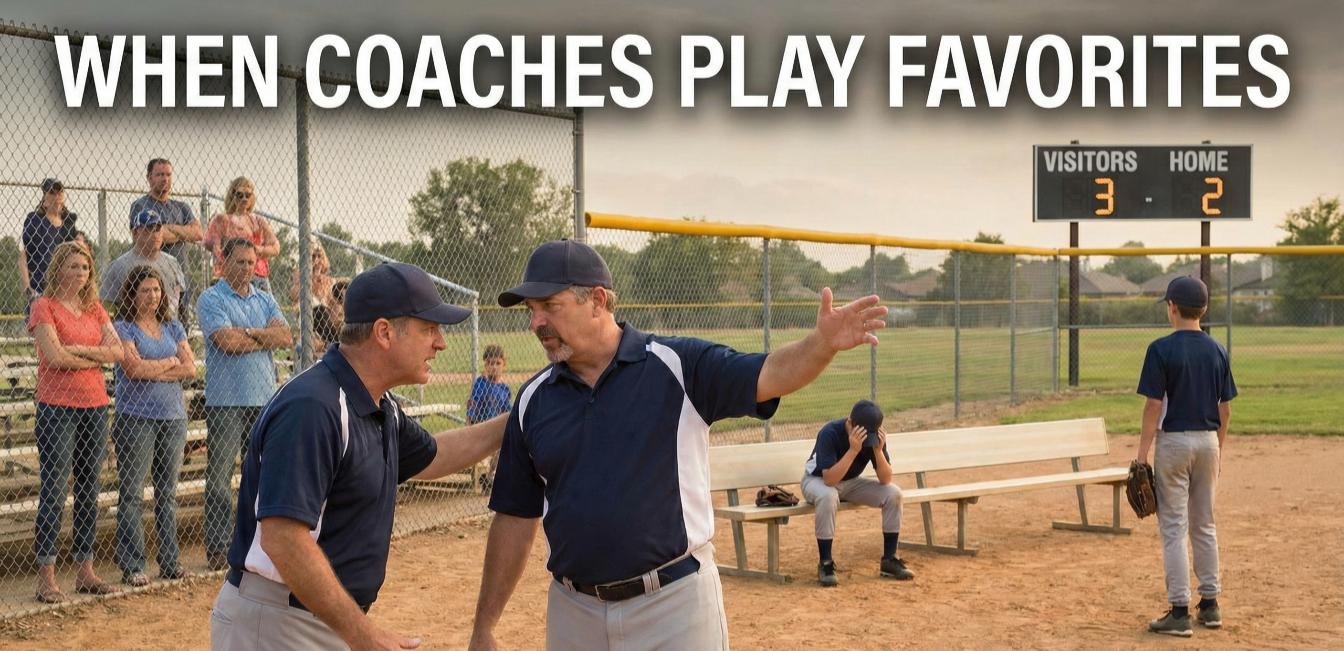
The lineup doesn’t change.
The same kids pitch in big moments.
Mistakes are forgiven for some — punished for others.
When coaches play favorites, politics quietly take over, and a team’s season can unravel faster than any losing streak.
🎭 What “Playing Favorites” Actually Looks Like
Favoritism isn’t always obvious. In fact, the most damaging forms are subtle.
It shows up as:
certain players never leaving the lineup
others being benched after one mistake
kids tied to the coach’s school, business, or social circle getting extra reps
guest players or “friends of the program” stepping into prime roles
roles being decided before tryouts even end
The message becomes clear — performance isn’t the deciding factor.
🧠 How Politics Impact Players
Players notice favoritism immediately.
For those favored:
accountability disappears
growth slows
pressure increases to “protect” status
For everyone else:
confidence erodes
effort feels pointless
development stalls
resentment builds
Once players believe effort doesn’t matter, the team culture breaks. Hustle fades. Communication dies. Kids stop playing freely — and that affects performance across the board.
🏆 The Competitive Cost of Favoritism
Ironically, favoritism hurts winning.
Coaches who rely on the same players:
burn out pitchers
reduce depth
limit versatility
expose teams late in tournaments
Teams win early when talent carries them — but fall apart when adversity hits and the bench isn’t prepared.
Politics create fragile teams.
👪 The Parent Perspective
Parents feel trapped.
Speak up — and risk retaliation.
Stay quiet — and watch their child disappear.
This tension poisons sidelines, group chats, and car rides home. Baseball becomes stressful instead of fun.
Families don’t leave because they hate baseball.
They leave because they lose trust.
⚾ Why Coaches Fall Into This Trap
Not all favoritism is malicious.
Some coaches:
feel pressure to win now
trust familiarity over fairness
protect kids they’ve coached longer
confuse loyalty with development
But intent doesn’t change impact. Kids don’t care why they’re treated differently — they care that they are.
🚩 Signs Politics Are Running the Team
Watch for:
vague answers about playing time
inconsistent discipline
unchanged lineups despite performance
defensive responses to honest questions
emphasis on “commitment” without opportunity
These are warning signs — not excuses.
🎯 Final Thought: Fairness Is the Foundation of Culture
At CurveballCritiques.com, we believe the best teams are built on trust.
That means:
roles are earned
accountability applies to everyone
development is intentional
communication is honest
Coaches don’t have to treat players equally — but they must treat them fairly.
Because when politics take over, the season is already lost — no matter what the record says.