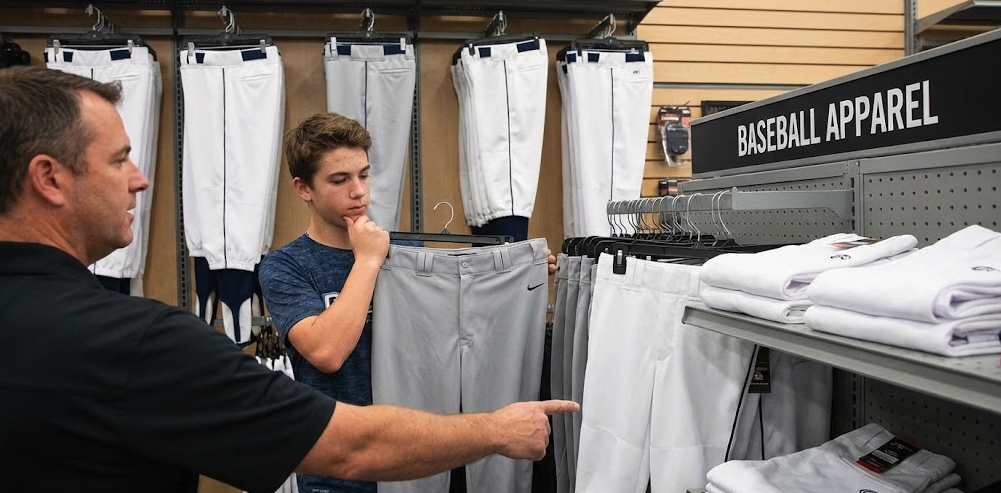
Baseball pants seem like a small detail… until you’re sliding, sweating, sprinting, squatting, and playing a doubleheader in them. The right pair disappears on your body (in a good way). The wrong pair turns into constant adjusting, ripped knees, and that annoying feeling that you’re either wearing cardboard or pajamas.
Here’s a practical way to choose baseball pants that work for any player—youth, high school, adult league, weekend warrior, or travel ball grinder.
Start with the Fit: Tight, Regular, or Loose?
Fit is personal, but it also affects performance and comfort.
Tapered / Athletic fit: more snug through the calf and ankle. Looks modern and clean, but can feel restrictive for players with bigger legs or who hate tight fabric.
Regular fit: the safest choice for most players. Enough room to move, but still looks sharp.
Relaxed / Wide leg fit: classic “old-school” drape. Great for comfort and freedom of movement, and usually feels more structured.
If a player runs a lot or steals, they may like a slightly slimmer fit for less fabric flapping around. If comfort is priority (or you slide a ton), roomier pants often win.
Choose the Bottom Style: Open Bottom vs. Cuffed vs. Knickers
This is one of the biggest “feel” differences.
Open bottom (full length): hangs over the cleat and gives a traditional look. Often more comfortable and less restrictive.
Cuffed / elastic bottom: keeps the pant leg in place and creates a more modern tapered look.
Knickers: old-school vibe with high socks, usually a looser feel in the lower leg.
There’s no right answer—just pick what matches your style and what you’re used to.
Fabric Matters More Than the Brand Name
Two pants can look identical online and feel totally different in real life.
Things to look for:
Durability / abrasion resistance: important for infielders, catchers, and anyone who slides.
Stretch: great for mobility, but super-light stretch pants can feel flimsy if you like structure.
Breathability: helpful in hot weather, but ultra-light pants can wear out faster.
A good rule: if you play a lot of games or slide often, lean durable. If you’re mostly practicing or in hot climates, lean breathable.
Double-Knee vs. Single-Knee (This One’s Easy)
If you play on dirt, slide, or play frequently: double-knee is usually worth it.
Double knee: more protection, lasts longer, better for infielders and anyone who’s rough on gear.
Single knee: lighter and sometimes cheaper, but tends to wear out quicker.
If you’ve ever blown through a knee mid-season, you already know which one to choose.
Don’t Ignore Waist and Belt Loop Details
Sounds boring, but it matters.
Look for a waistband that doesn’t roll or collapse.
Belt loops should feel sturdy (especially if you wear a belt every game).
Some pants have a grippy waistband or reinforced closure—small features, big difference over a long season.
Comfort at the waist is huge because you’ll be moving constantly.
Match the Pant to the Role (Yes, Positions Matter)
Not every position abuses pants the same way.
Infielders: durability + double knee is a strong move.
Outfielders: comfort + mobility usually matters most.
Catchers: durable fabric is key—plus enough room to squat comfortably.
Pitchers: comfort and flexibility are usually priority (you’ll repeat the same movements nonstop).
You don’t need “position-specific” pants, but it helps to know how you’ll wear them out.
The Real Secret: Try One Pair, Then Stick With What Works
A lot of players waste money buying three “pretty good” pairs instead of finding one that’s actually right.
If you find a pair that fits perfectly:
buy a second pair immediately
keep it as the “game” pair
rotate them so they last longer
Baseball pants are like cleats—once you find the right fit, don’t reinvent the wheel.
At CurveballCritiques.com we believe choosing baseball pants shouldn’t be stressful. Focus on the basics: fit, bottom style, fabric, and durability. The best pair is the one you never think about during a game—because it lets you move freely, slide confidently, and show up ready to play.